Middle Tennessee got a new golf course over Labor Day weekend, and this one comes with a name most golf nerds will recognize before they ever see the property. Firefly, the 700-acre private community rising out of the rolling farmland in Spring Hill, opened its 18-hole championship course and nine-hole short course the first weekend of September. Both were designed by Andrew Green, and both are the first original designs of his career.
If you follow golf architecture at all, that last sentence is the headline. If you follow Spring Hill real estate, the rest of this story is.
Who Is Andrew Green and Why Does It Matter
Green is the guy the blue-blood clubs call when they want their golden-age course back. His restoration work at Congressional, Oak Hill, Inverness, Interlachen and East Lake put his name in the same breath as Hanse and Coore and Crenshaw, and Oak Hill's East Course looked so good after his touch-up that it got the 2023 PGA Championship. East Lake reopened in 2024 and is the annual home of the Tour Championship.
So Green has spent the better part of two decades studying what Donald Ross, A.W. Tillinghast and Seth Raynor did right, then putting it back the way they meant it. Firefly is the first time he has walked onto a raw piece of ground with nothing to restore and everything to decide. Green described the project as the opportunity every architect hopes for, and said the goal was a course that feels discovered rather than imposed. That is the kind of quote every architect gives. The difference here is that Green has the resume to back it up, and Middle Tennessee is the place he chose to prove it.
The Golf
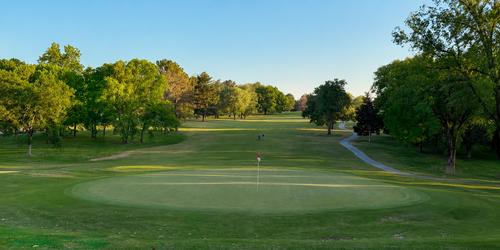
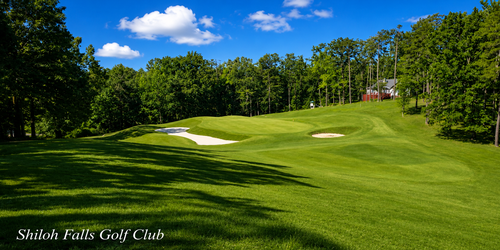
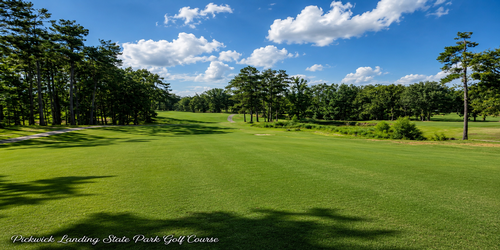
The championship course is a walking-friendly core layout, meaning the holes sit together in one block rather than snaking through cul-de-sacs the way so many community courses do. Homesites frame the golf rather than crowd it. Green routed the holes across the natural movement of the land, and the property has plenty of movement to work with. Spring Hill sits in the hilly country south of Franklin where the ground rolls, the creeks cut through and the hardwoods still stand.
The tees run from more than 7,300 yards down to 4,860, which is a serious spread. The back tees will hold their own against anyone in the Nashville area. The forward tees mean the rest of the family, and the rest of your foursome after the third bourbon, can still get around without losing the will to live. Green's stated priorities are strategic angles, varied shot-making and green complexes with real contour, which is exactly what you would expect from someone who spent years crawling around Ross and Tillinghast greens with a probe and a notebook.
The short course is nine holes ranging from 70 to 210 yards. That range matters. A 70-yard hole is a wedge and a prayer. A 210-yard hole is a hybrid into a green you have to think about. Nine holes with that kind of variety is a legitimate practice ground, a sunset loop with the kids or a place to settle the afternoon Nassau in under an hour.
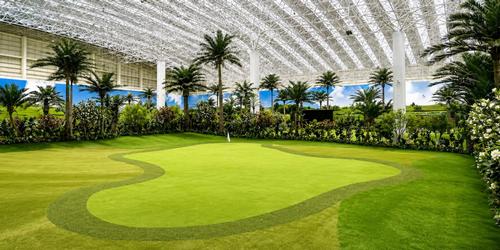
The practice campus is also built for people who actually work on their game. There is a full practice field, three short-game greens, an 18,000-square-foot putting green and a teaching facility with Trackman, two indoor and outdoor hitting bays and a SAM putting lab. Nobody is building this much practice infrastructure for a club that plans to be casual about golf.
What Is Not Built Yet
Here is the honest part. Firefly opened the golf first and is building the rest of the club around it. The first three amenity buildings, the Fieldhouse, the Golf Shop and the Outpost, were designed by SWABACK and are scheduled to open in spring 2027. The full clubhouse, the fitness center, the pools, the bowling alley, the golf simulators, the music hall and the racquet club with tennis, padel and indoor pickleball are all still on the long-range plan.
From where I sit, opening the golf first is the right call. The course is the one thing you cannot fix later. Get the routing wrong and you live with it for 50 years. Get the bar wrong and you renovate it in five. Storied Development, the group behind Firefly along with Wheelock Street Capital, clearly knows this. Their team also has a hand in The Grove in College Grove, Talisker Club in Park City and Boot Ranch in Fredericksburg, Texas, so they have done the private-community dance before.
The Real Estate Side
Firefly is private, so unless you know a member or buy a lot, you are not teeing it up there. And the lots are moving. Nearly 150 homesites have sold since 2025, and fewer than 30 remain across Phases I and II. The developer says more than 4,000 sales inquiries turned into 350-plus property tours, which is a strong conversion rate for a community that had no finished golf course to show until two weeks ago.
What is left is a mix of golf-frontage, creekside and green-space homesites tied together by planned trail networks. Pricing runs from about $700,000 to more than $2 million for the land alone, with home construction expected to begin in 2027. So plan on a real number once you add a house, and plan on some patience before you are sleeping on the property.
That pricing tells you who Firefly is for. It is not competing with the daily-fee tracks around Columbia or the older member clubs in Franklin and Brentwood. It is competing with The Grove, with the Nashville-area clubs that have been renovating to keep up, and with the idea that a family with money can have a serious golf course and a serious club without a 45-minute drive to either one.
Why Spring Hill
Ten years ago, Spring Hill was the town with the GM plant. Today it is one of the fastest-growing communities in Tennessee, sitting on the Williamson and Maury county line about 30 miles south of downtown Nashville and 15 miles south of Franklin. The growth that pushed north from Nashville into Franklin has kept rolling south, and Spring Hill caught it.
Golf has followed. The Nashville market has seen Gil Hanse open the Upper Course at the Golf Club of Tennessee, and several other private projects are in various stages of dirt and rumor. Firefly is the first of the new wave to actually open, and it is the only one with an architect making his original-design debut. That combination is why golf writers outside Tennessee are paying attention to a private club in a town most of them could not find on a map.
The Bottom Line
For the average Tennessee golfer, Firefly is a course you will read about more than you will play. For the golfer looking for a place to land a family in Middle Tennessee, it is a credible, well-funded club with a course that has a real shot at national rankings once the raters get through the gate. And for Andrew Green, it is the project that answers the question everyone in the architecture world has been asking: what does the best restoration guy in the business do when he finally gets a blank canvas?
We will find out over the next few seasons. Spring Hill just got a lot more interesting.